World Premiere of TRACES OF HOME by Colette Ghunim
Colette Ghunim, a 2020 BAVC MediaMaker Fellow, will premiere her feature documentary Traces of Home at DocNYC on Friday, November 14. The film represents the culmination of a nine-year production, exploring belonging and identity across generations. In our conversation, Ghunim reflected on the process of bringing the film to life, the importance of intentional audience outreach, and the impact of building an advisory board of more than 200 nonprofit partners.
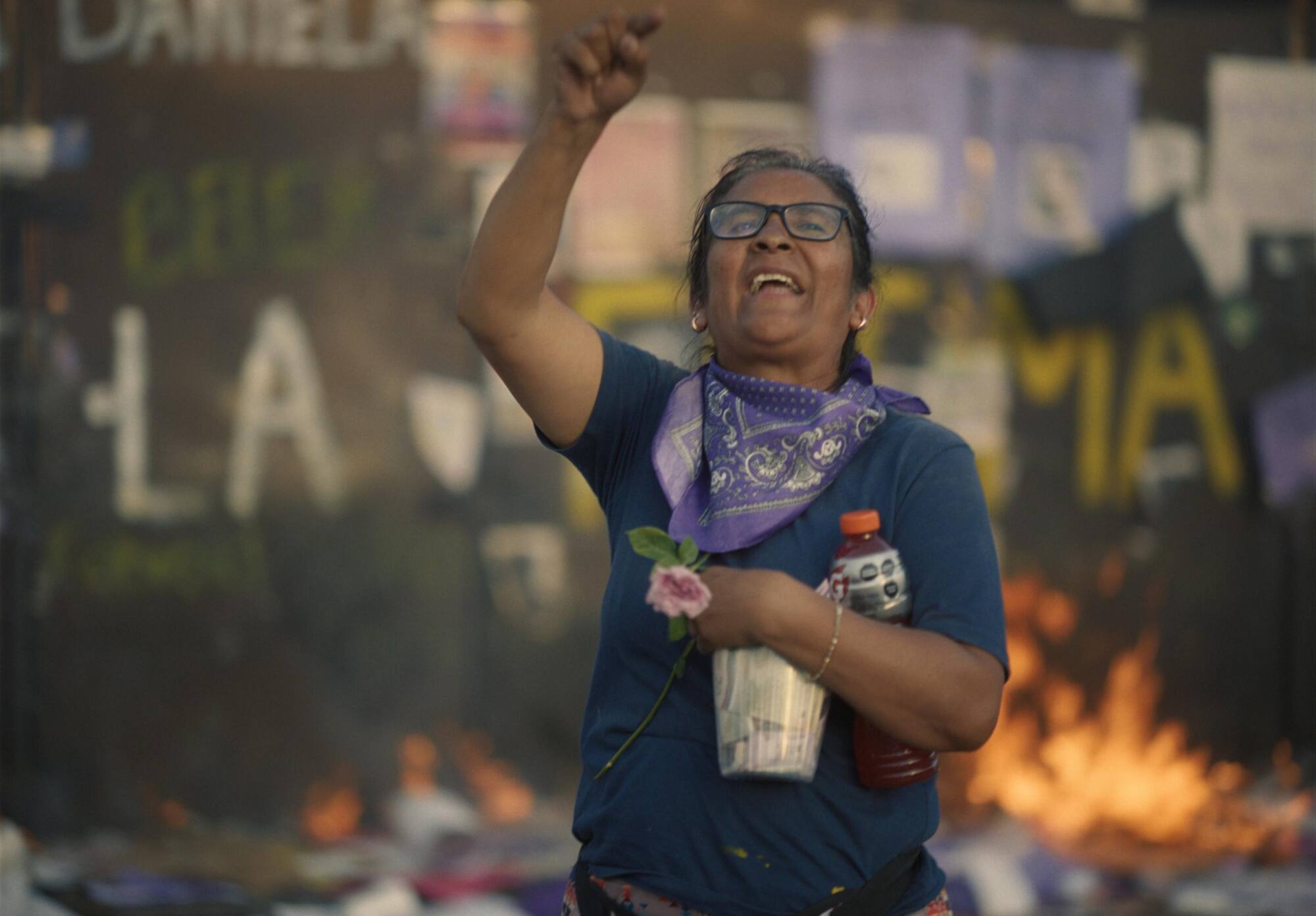
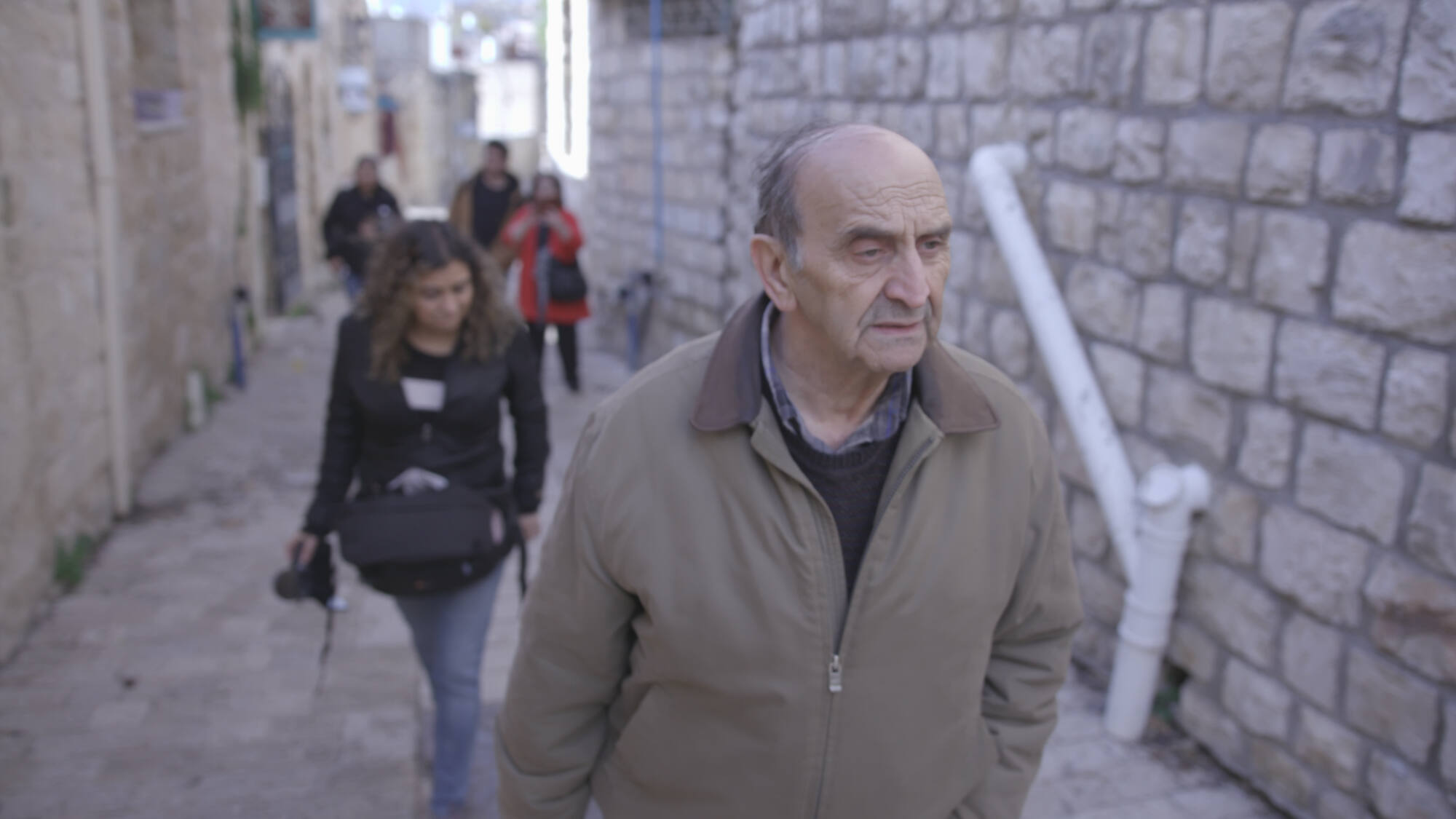
Traces of Home follows Ghunim as she joins her parents in searching for the ancestral homes they were forced to flee as children in Mexico and Palestine. What begins as a journey to reconnect with their histories evolves into a profound exploration of home, displacement, and self-discovery.
Read the full interview below. It has been edited for length and clarity.
What role has BAVC Media played in your filmmaking journey?
BAVC has played an integral role in getting the film to completion – being part of the media maker fellowship in 2020 was the launching pad from moving this deeply personal film out of the Chicago industry, and into a national documentary landscape. Being part of a cohort model and being able to learn from others on their own journeys at different stages was so deeply in inspiring, and I still keep these connections and friendships until today. They have become my advisors and guides along the process,
Being part of a cohort model and being able to learn from others on their own journeys at different stages was so deeply in inspiring, and I still keep these connections and friendships today. They have become my advisors and guides along the process, and the staff at BAVC have gone above and beyond over the past five years to continue to support the film through post-production. We have cohosted feedback screenings, as well as our strategy summit at the Bay Area office, in partnership with Working Films. The team has been instrumental in providing both creative feedback and fundraising strategy, as well as being an emotional support during the toughest times in the process. I have truly felt so held by this community.
How did the Bay Area filmmaking community support or influence your approach to your film?
Moving to the Bay from Chicago a little over two years ago, I had no idea what a robust and thriving film community I would be entering in to. I have learned so much from such heart-centered, authentic filmmakers, who deeply care for social justice and inner healing. They have allowed me to expand from my own confines of what I thought documentary filmmaking was, to be even more creative and lyrical in my own approach to Traces of Home.
We held multiple feedback screenings over the past two years in the edit room with local filmmakers, and the level of support and selfless service towards making this film the best possible has moved my own heart so deeply. I can only hope that I am able to pay it forward and give back to this community that has shaped Traces of Home to what is today.
Can you describe the journey of bringing Traces of Home from concept to final cut? What were some of the biggest challenges?
My motivation for making Traces of Home began in 2016, when the previous administration started vilifying Arabs and Latinos through discriminatory policies, e.g. the refugee ban, the Muslim travel ban, threats to DACA, and family separations. Knowing that my parents had parallel stories to Trump’s Latino/Arab targets, I felt compelled to share my own parents’ stories of forced migration.
However, once I entered into production, I was forced to confront my deeper, more personal motivations for returning to explore my parents’ childhood roots and confront my own disconnect to “home”. Growing up removed from my origins, I had never before unpacked how my parents’ childhood trauma shaped all of our lives after fleeing their homelands. I now recognize my mother’s stunted childhood resulted in a strong need to control throughout her life, including her household and her children. I felt uncomfortable being my full self as she scrutinized my behavior and choices. The impossibility of showing authentic emotional vulnerability in my home weakened our relationship and my own self-esteem until the present.
On the surface, Traces of Home gives crucial historical context to the ongoing genocide in Gaza, as well as to current stories of forced migration from Mexico to Palestine. In its deeper layers, the film reflects on buried emotional walls carried down to our generation of children of immigrants and refugees. Discussing this with several first-generation Americans, I realize this disconnect is an all too common outcome of intergenerational trauma.
Traces of Home is a deeply personal film that strives to articulate feelings of loss of home that my family and I struggle to both admit to and find the words for. Over the past five years of therapy and deep reflection, I have come to the realization that, at its core, making this project was a route to heal the blocked relationship not only with my family, but with myself. By witnessing my path to true self-acceptance, I aim for my community to be able to do the same.
What do you hope audiences take away from Traces of Home?
Traces of Home’s impact vision is to contribute to the healing of intergenerational trauma within BIPOC communities in the United States and globally by raising awareness of the lasting mental, emotional, familial, and communal impacts of forced displacement due to violence.
Our primary audiences are Arab, Latino, and biracial first-generation American audiences. Rarely seeing ourselves on screen, the film speaks directly to our collective yet underexplored experiences with our refugee and immigrant parents. Rarely seeing ourselves on screen, the film speaks directly to preserving our collective yet underexplored legacies with our refugee and immigrant parents. As many children of immigrants are only now beginning to understand the impacts of colonization on themselves, our families, and our communities, this film is essential in beginning the process of exploring our own disconnected identity and sense of self.
Healing our trauma and unlearning supremacist conditioning is an essential first step for the mobilization efforts needed to ensure equity and justice to shift the legacy of the generations ahead.
This documentary fills a much-needed gap, delving into the lived experience of children of immigrants, exploring the impact of trauma that we inherited from our parents’ disconnect from our native lands and cultures. Traces of Home touches on sensitive topics such as self-worth, addiction, and lack of belonging, which are often kept secret within immigrant families. It also has the ability to be a bridge builder across cultures, seeing as it will bring together both Latin American and Arab audiences.
Our biggest aim is for it to become a Trojan horse for greater movement building around already existing campaigns for migrant rights and to end U.S. military aid to Israel; because it is so deeply personal, it creates a space of personal inspiration to take action in a way that an explicitly political film may not be able to.
The film takes place across two countries with deep personal and political histories for your family. What kinds of preparation or collaboration were needed on the ground in Mexico and Palestine to make those shoots possible?
Growing up in the suburbs in the United States, I never understood the severity of what my parents endured to escape Mexico and Palestine. After visiting a migrant shelter in Tijuana and demolished homes in the West Bank while filming, my parents’ experiences completely transformed. I realized their traumas decades ago directly parallel the atrocities occurring today in both communities. This new awareness made it crucial for me to include each community’s present-day struggles in the film.
Traveling to Mexico and Palestine together while attending therapy forced me to confront the disconnect not only to my culture, but to my family. The intentional space to reflect on the impact of their trauma slowly transformed the heart of the film into my own internal quest.
Regarding the film team, I have been extremely intentional in the hiring of local crew that come from my own communities. My editors are all Arab and/or Latina immigrant womxn; I worked with local production crews in Mexico and Palestine to boost their local industries and gain a first-hand understanding of these places I had never been to, even if they are in my heritage. This intentional selection of the team’s background allows us to explore these complex issues with a unique depth and sensitivity.
It was imperative to me since the inception that my entire family is part of the production process of Traces of Home. My brother has filmed and interviewed my parents and vice versa. I allow my family to ask me questions, to ensure that I am being just as vulnerable as them and sharing my own experiences on camera.
During the trips to Mexico and Palestine, my parents did not participate in activities that could potentially trigger their past traumas. I hired a Palestinian film crew that would allow my father to speak in his native language. On challenging days such as the political tours in Mexico and Palestine, I built in time to rest and process what we had experienced.
You worked extensively creating awareness and generating wide support for your film over the past 9 years. How did you approach building an audience for Traces of Home during the production and fundraising process, and what have you learned about reaching people who connect with your story prior to its release?
Over the past 9 years, we organized an advisory board of over 200 relevant nonprofit organizations that work in the spaces of Arab, Latinx, mental health, and immigration communities. Creating this advisory board was essential to build relationships at the early stages, and especially now, once the film will be released in various parts of the United States. I realized that having even just a one-pager and a trailer is enough to begin to garner interest, and that these organizations already have so many existing initiatives that are directly aligned with the themes of the film.
By having a quarterly newsletter with updates about the film, we were able to stay in touch and begin to develop deeper relationships with the organizations that we knew would be integral to our audience outreach, strategy, as well as our impact campaign vision.
What advice would you give to filmmakers for finding the audience for their film?
No matter how niche or specific your film may feel, there are people who will deeply resonate with it, and your film will be the transformational key for their own understanding of themselves and their community. Do not be afraid to get very specific in your audience outreach. It is better to become more specific than to cast a wide net for those who may not resonate as deeply at these early stages of the filmmaking process. I would also say having a one-pager and a trailer is essential for this outreach, which includes a brief description about the film and your distribution vision, as well as options of how organizations can become involved and stay up-to-date on the film’s progress.
Get tickets for Traces of Home at DocNYC on Friday, November 14 here. Follow Traces of Home on Instagram for updates on more upcoming screenings.