Mapping the Magnetic Media Landscape report
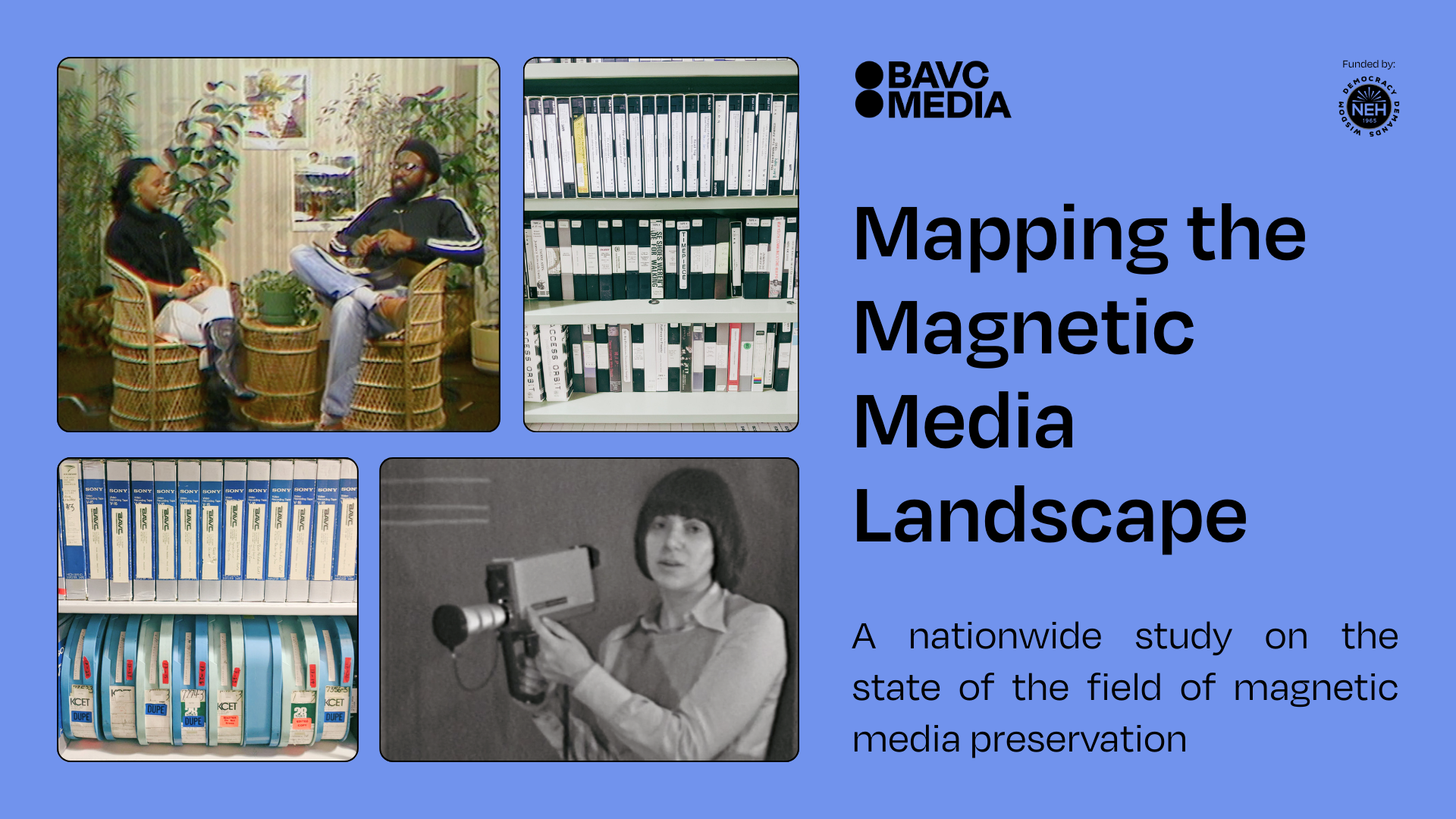
BAVC Media-led research project supported by the National Endowment for the Humanities (NEH)
[This announcement was first published by Documentary Magazine on September 8, 2025]
SAN FRANCISCO, CA — September 9, 2025 — BAVC Media (Bay Area Video Coalition) has published Mapping the Magnetic Media Landscape, a nationwide research study designed to learn more about the state of magnetic preservation efforts happening across the country in our archives, libraries, community organizations, and historical organizations. Co-authored by Moriah Ulinskas, Kailen Sallander (Research & Development Manager, BAVC Media), and Kelli Shay Hix.
Early findings from the Mapping the Magnetic Media Landscape study were published in Documentary Magazine (“What Filmmakers Should Know About Privacy and Copyright From BAVC Media’s Upcoming Landmark Study on Magnetic Media” April 16, 2025).
The purpose of this research was to develop an expansive, data-driven understanding of the field of analog audiovisual media digitization and conservation in the United States. The resulting data will be used to identify and respond to our greatest challenges in the changing field of audiovisual preservation. Upon the conclusion of the survey and its evaluation, participants will receive a media toolkit and resource guide that synthesizes and interprets the study’s findings.
“Cultural preservation has long been a cornerstone of BAVC Media’s work. For over 30 years, our preservation team has worked with some of the most influential video artists to preserve thousands of hours of media. This national study addresses the urgent need to understand what’s happening on the ground in the preservation and archival field, and who’s doing the critical work.” – Paula Smith Arrigoni, Executive Director of BAVC Media.
Aside from working with filmmakers, historical organizations, museums, and universities, BAVC Media’s commitment to preservation also extends to its local community. Through the SF COMMONS Playback Lab, BAVC Media offers a free, do-it-yourself audiovisual preservation service for San Francisco residents to digitize their own audiovisual artifacts held on VHS, Video8/Hi8, and digital video formats.
The Mapping the Magnetic Media Landscape project was developed with the support of the National Endowment for the Humanities and involved four primary research methods to gather quantitative and qualitative data. These methods included:
- A survey delivered to magnetic media collecting organizations.
- A series of in-depth interviews with collections stewards whose organizations participated in the survey;
- Three in-person site visits with geographically diverse organizations of differing sizes and structures; and
- Five interviews with non-collecting organizations that work in magnetic media preservation on a national level.
Nearly all respondents (99%) report that their collections contain unique, irreplaceable content that captures otherwise lost voices, cultural practices, and histories. Interviewees agreed that the emotional impact of archives was of primary importance. People felt connected to their past through these materials.
Collections include:
- Government and public broadcasting, such as children’s programming, Senate TV, and local news archives
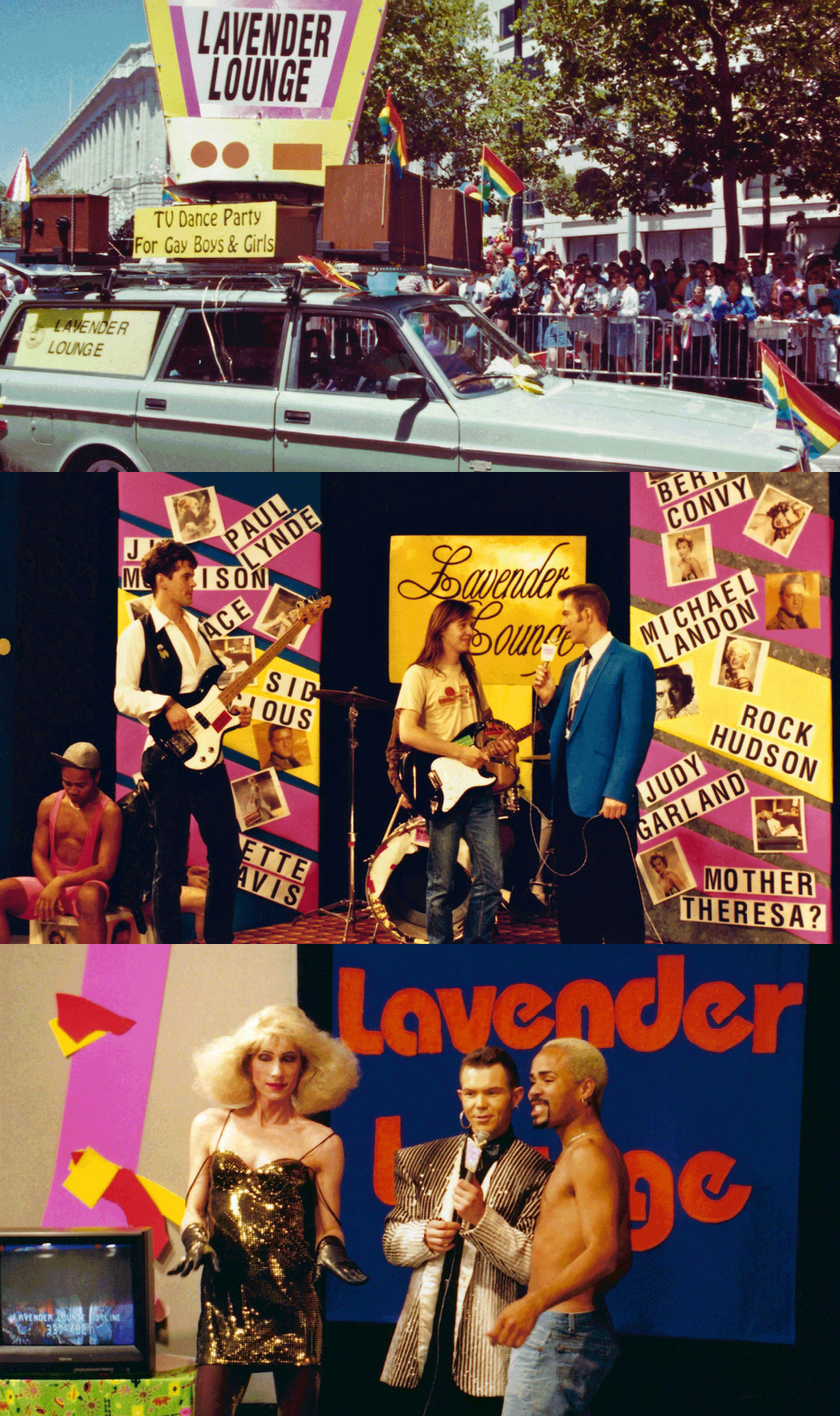
- Performing arts, like dance documentation, video art, and experimental music recordings
- Regional and cultural history programs and recordings
- International and cultural film programs
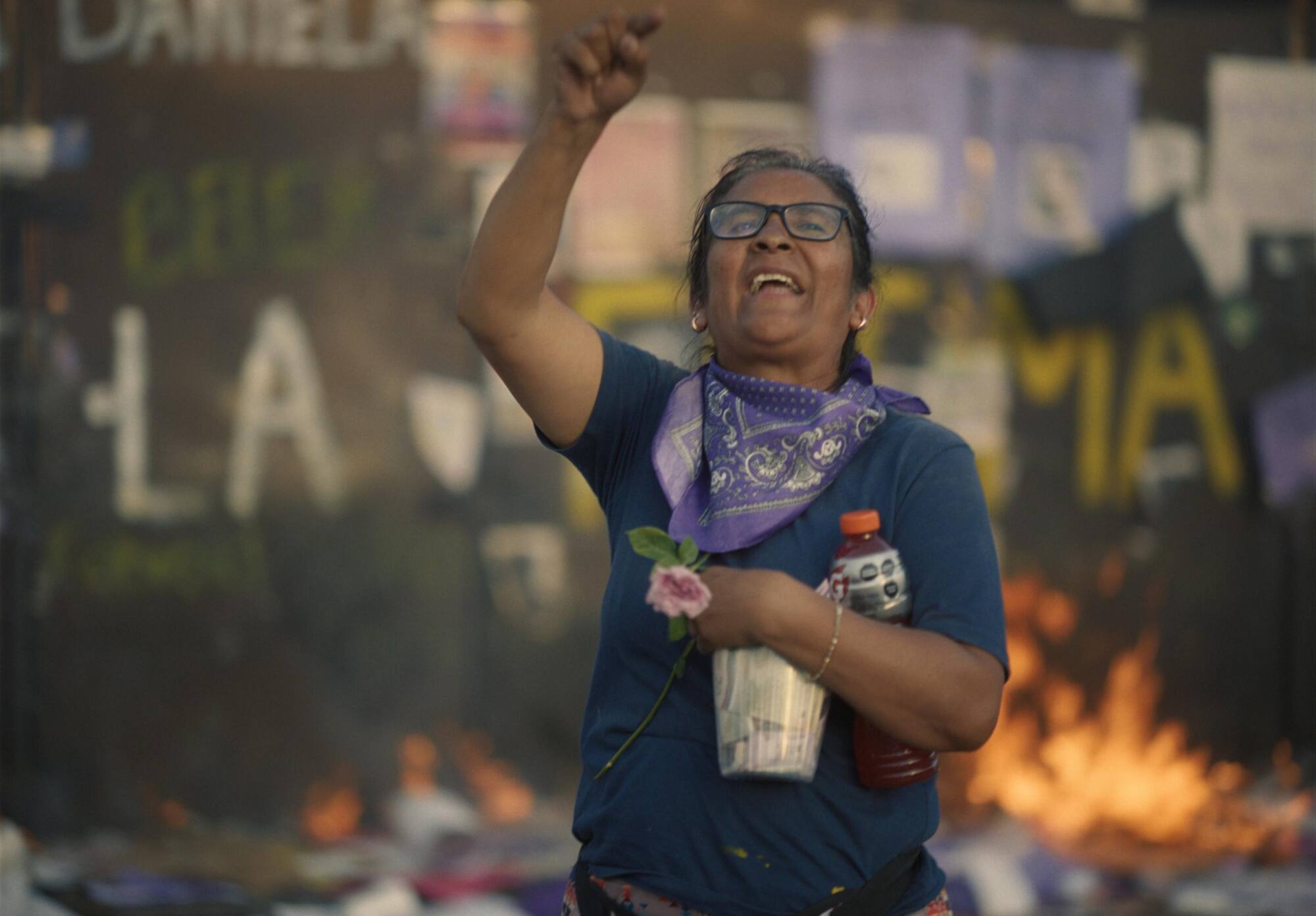
- Footage documenting marginalized communities
- Documentation of labor and social justice movements and union activities
- Academic and educational materials, like university lectures and sports footage
- Corporate and institutional records
Among the key takeaways from the report, only 6.5% of respondents reported being extremely confident they can digitize their magnetic media collections, while 29% reported being not confident at all. Respondents reported a significant need to continue their education as preservation standards shift over time. Interviewees also strongly emphasized the ability of audiovisual collections to capture and preserve cultural practices, voices, and perspectives that might otherwise go undocumented or be overlooked. 50% of survey respondents reported that their staff did not have training in stewarding and describing culturally sensitive materials.
A standout challenge for the field is the heavy reliance on grant-funded projects. Approximately 80% of survey respondents are funded in part by government grants, and 87% report receiving non-government grants for their organizations.
We know that critical federal funding for U.S. organizations has been dramatically reduced or eliminated since this study, particularly jeopardizing marginalized communities by eliminating grants for preservation, digitization, and access to endangered cultural heritage. A short follow-up form was sent to survey respondents to get a sense of the impact. 37 organizations responded, 56% of whom reported being affected by the recent cuts to federal funds. “All our digitization projects are funded by grants, including those from the National Endowment for the Humanities (NEH) and National Endowment for the Arts (NEA),” shared one respondent. “Without these grants, mass digitization will not happen at our organization.”
Responding organizations estimate a shared loss of $11,747,643 due to the cuts. The full impact of these cuts, especially the long-term effects on magnetic media preservation, cannot be fully described at the time of this report. Sections of this report that include references to federally funded work usually refer to work performed before the cuts. They may serve as a valuable comparative resource in the future.
The study not only identifies the shared challenges but also uplifts the interventions and solutions actively being used to address them. Kailen Sallander, Research & Development Manager at BAVC Media, comments: “Working firsthand in the community of audiovisual archivists for the last three years has shown how genuinely resilient, creative, and resourceful the stewards preserving our shared history are. The practitioners in this field are dedicated to collectively solving their shared challenges and preserving their collections – from working on internal education and advocacy, to building regional networks, and utilizing DIY equipment. Being able to share these findings and recommendations with the field nationally and internationally, online and at upcoming conferences, is a vital final step in maximizing the ongoing impact of this study.”
Findings from Mapping the Magnetic Media Landscape will be presented at upcoming conferences, including The International Association of Sound and Audiovisual Archives (IASA), Honolulu, HI, in September; The Australasian Sound Recordings Association (ASRA), Sydney, Australia in October; and The Association of Moving Image Archivists (AMIA), Baltimore, M,D in December.
The Mapping the Magnetic Media Landscape final report is available to download now at bavc.org/magnetic-media-study
Co-author biographies
Moriah Ulinskas
Moriah Ulinskas is the Project Advisor. She is an archivist, public historian, and Community Archiving Workshop (CAW) Collective member. She provided methodological guidance, supported data collection, and led the analysis and writing of interview findings for the narrative report. She was the Preservation Program Director at BAVC Media from 2011 to 2014. In her role, she oversaw the development of the first release of QCTOOLS and the AV Artifact Atlas, open-source tools for audiovisual preservationists, and established the NEA-funded Preservation Access Program.
Kailen Sallander
Kailen Sallander is the Research and Development Manager at BAVC Media. She designed and implemented the survey, coordinated interviews, and led the analysis and writing of the survey findings for the narrative report. In her role at BAVC Media, she leads program evaluation, data collection, and field-wide studies at BAVC Media. She has previously worked with the San Mateo County government, and the research institution Child Trends on data-driven projects.
Kelli Shay Hix
Kelli Shay Hix is the Project Director for the study. She is a consultant, Fulbright Specialist, and Community Archiving Workshop (CAW) Collective member. She led the development of the content of the survey and interview questions, designed the site visit protocols, authored the case studies, and synthesized statistical and narrative findings into final recommendations. Her past clients include the Smithsonian Institution, the National Geographic Society, and the Country Music Hall of Fame and Museum.